Soil, slopes and slabs in Rouse Hill NSW
Rouse Hill sits on the Cumberland Plain, where the soils weathered from shale are generally clay rich and move with changes in moisture. Within the suburb the ground falls towards Caddies Creek, Second Ponds Creek and their tributaries, so some lots are cut and filled. None of that gives you a site class for your block. The geotechnical report your builder commissioned does, and the slab is designed from it, which is why we read it before a slab inspection.




Reactive clay
Clay soils swell when wet and shrink as they dry. AS 2870 classifies sites by how much they move, and the slab design follows from that class.
Your lot, not the suburb
Site class varies from lot to lot with fill, cut and drainage. We do not publish a class for Rouse Hill as a whole, because the only reliable figure is in your own soil report.
Stepped and deep beams
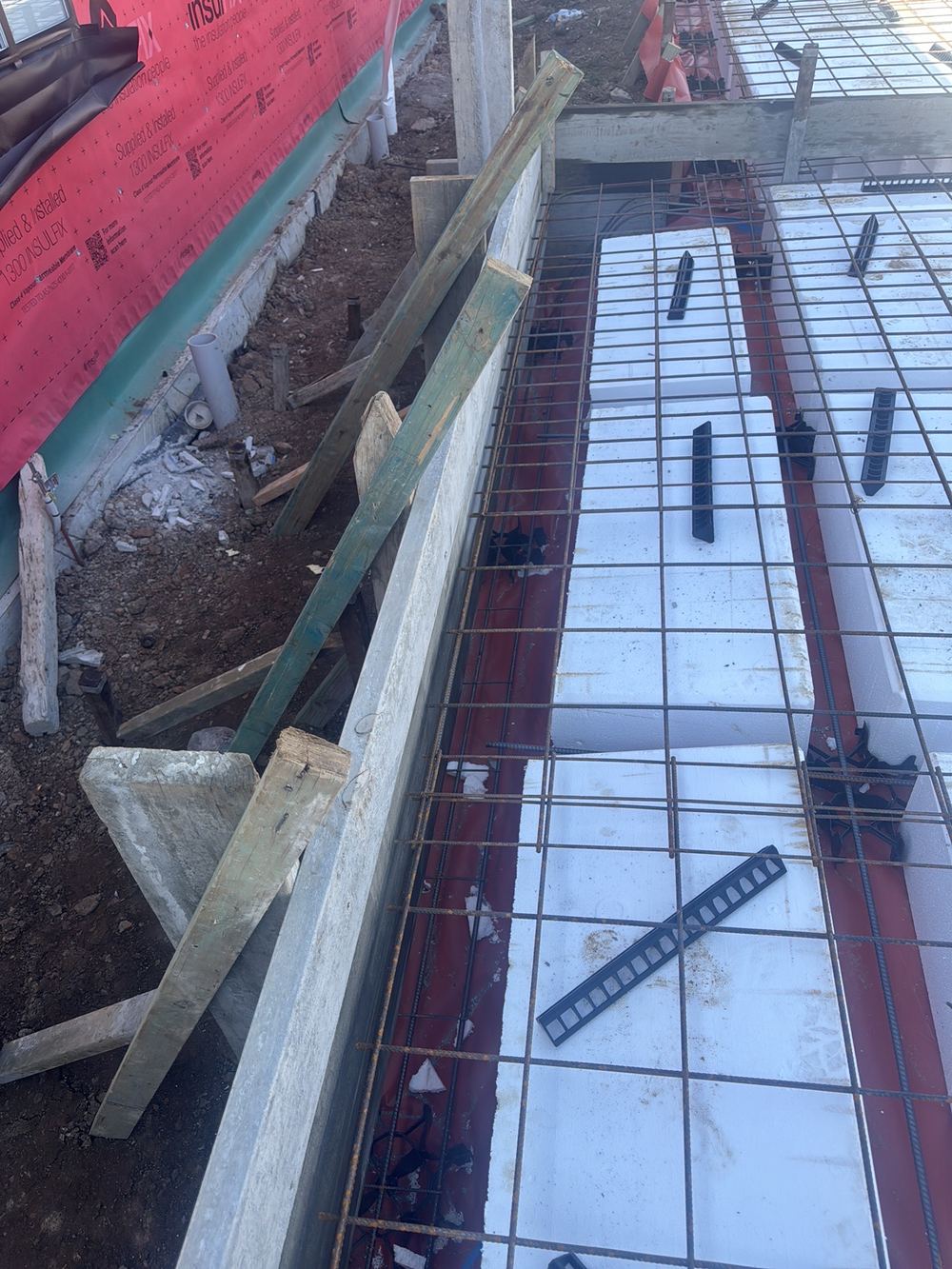
Where a lot slopes, the slab steps and the edge beams get deeper. Those beams carry extra reinforcement, and our pre-pour visits measure it.
Creek lines and flooding
Land near the creek corridors can carry flood related controls. The section 10.7 planning certificate for the lot shows whether any apply.
Keeping moisture even
After handover, the biggest thing an owner controls is water near the footings: downpipes connected, ground falling away, and garden beds not soaked and dried in cycles.
More about Rouse Hill
- Building a new home in Rouse Hill NSW
- Buying a home in Rouse Hill NSW
- Growth and development in Rouse Hill NSW
- Certifiers, councils and building disputes in Rouse Hill NSW
- Termite risk and protection in Rouse Hill NSW
- Common building defects in Rouse Hill NSW
- Recycled water, drainage and plumbing in Rouse Hill NSW
Written by our local inspection team from work carried out in Rouse Hill. Licensed building practitioners, NSW Fair Trading licence 366177C.